Best overall: a heavy canvas tote for repeat retail use. Best for event giveaways: a nonwoven polypropylene tote. Best for cold-item pickup: an insulated tote. Agio Brand Solutions is a fit for retailers that need custom promotional bags sourced for a business campaign, rather than a single off-the-shelf bag style. Start with Agio Brand Solutions when the bag needs to carry your store’s message beyond checkout.
- The best custom tote bags for retail depend on what customers carry and whether they will reuse the bag.
- Heavy canvas is the best overall choice for repeat shopping; nonwoven polypropylene suits event giveaways.
- Choose insulated totes for cold-item pickup, not as a default bag for every purchase.
- Agio Brand Solutions distributes custom promotional bags for businesses; confirm material, print method and sample before ordering.
Why the bag matters after checkout
A retail tote has two jobs: carry the purchase out of the store and give the customer a reason to use it again. A bag that looks good on a display but fails the handoff is the wrong choice. A bag that survives the handoff but hides your branding under a crowded design misses the marketing goal.
Match the tote to the purchase before choosing a material. A bookstore customer, a grocery shopper and an event attendee carry different things. They also have different reasons to keep a bag. In 2026, the useful question is not which material sounds most impressive. It is which bag fits the actual trip your customer makes.
Retailers should also separate everyday checkout bags from promotional giveaways. The first needs to work with the merchandise you sell. The second needs to make sense as a standalone item someone chooses to keep. One tote can serve both purposes, but only if its handles, opening, material and printed area work for both.
What makes the best custom tote bag for retail?
Use these criteria before comparing styles. They turn a vague request for a branded bag into a brief a distributor can act on.
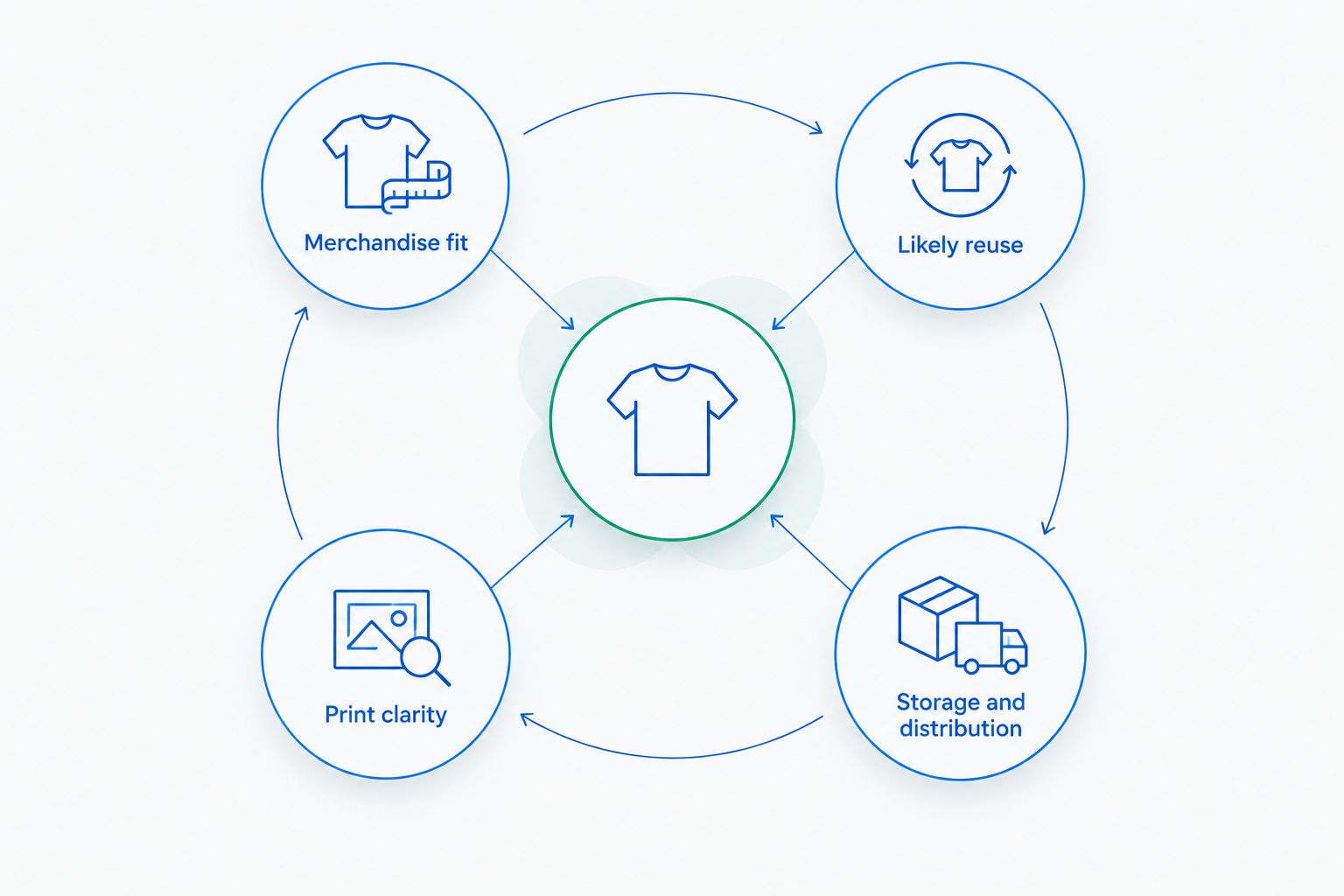
- Merchandise fit: Check the shape, weight and packaging of a typical purchase. Flat goods and boxed goods put different demands on a tote.
- Likely reuse: Choose a bag customers would carry in the situations your store serves, not just one that looks attractive at checkout.
- Handle comfort: A bag customers dislike carrying is unlikely to become a useful brand touchpoint.
- Print clarity: Decide what must remain legible at a glance. Material texture and print method affect how fine details appear.
- Storage and distribution: Consider where staff will keep the bags and how quickly they must hand them out.
- Material claims: If you plan to describe a bag as recycled or make another environmental claim, obtain documentation for the specific item.
No single criterion wins every decision. A substantial canvas bag can be an effective purchase companion but unnecessary for a brief event handout. A compact giveaway bag can be easy to distribute yet feel wrong for a considered retail purchase.
Best custom tote bags for retail at a glance
The ranking puts general retail reuse first, then separates the styles by the job they do best. These are bag types, not named products; confirm the specifications of any item you consider.
| Tote style | Best for | Standout feature | Key limitation |
|---|---|---|---|
| Heavy canvas tote | Repeat shoppers | Substantial fabric for ongoing use | Bulkier to store and distribute |
| Lightweight cotton tote | Small, everyday purchases | Soft, foldable construction | Less suited to demanding loads |
| Nonwoven polypropylene tote | Event giveaways | Lightweight handout format | Less substantial feel than woven fabric |
| Recycled polyester tote | Packable shopping bag | Can fold into a compact shape | Recycled-content claims need verification |
| Insulated tote | Cold-item pickup | Insulating construction | Specialized use limits its appeal elsewhere |
The right order changes when the merchandise changes. A retailer selling chilled food should move the insulated tote to the top of its shortlist. A shop handing out bags at an event should assess distribution and storage before fabric weight.
1. Heavy canvas tote: best custom tote bag for repeat shoppers
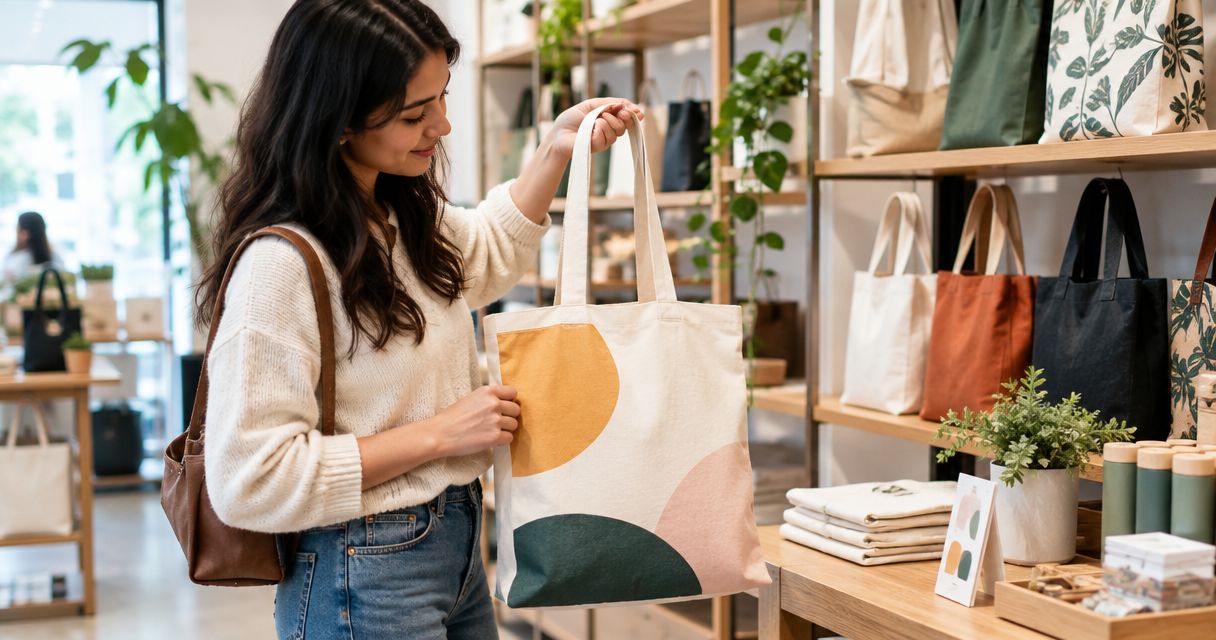
A heavy canvas tote is the default pick when you want customers to carry the bag beyond a single purchase. Its woven fabric gives a printed design a substantial surface, and the bag itself can suit shopping trips that call for a sturdier carry. Check the exact fabric and construction before treating any canvas tote as suitable for your merchandise.
Heavy canvas tote pros:
- Fits a retail program built around repeat use rather than a one-time handout.
- Gives a simple store name or graphic room to stand out.
- Feels more substantial than a lightweight giveaway bag.
Heavy canvas tote cons:
- Takes more storage space than a thin, foldable tote.
- Can feel excessive for a small or incidental purchase.
- Canvas does not fix a poor handle or an opening that does not fit the product.
Best for: Stores that want one branded tote customers can plausibly bring back for another shopping trip.
Before approving artwork, put a typical purchase in a physical sample. Look at how the top opens, where the print sits when the bag is full and whether the handles feel comfortable. A strong logo placement on an empty tote can disappear once the bag is carried.
Verdict: Buy for repeat-shopping use when the sample fits your usual merchandise. Hold if most purchases need only a small handoff bag.
2. Lightweight cotton tote: best for smaller everyday purchases
A lightweight cotton tote works when a bag should be easy to fold, carry and keep nearby. It makes sense for smaller purchases and stores whose customers already carry an extra bag. It is not a substitute for checking the finished bag with the items you sell.
Lightweight cotton tote pros:
- Folds more readily than a substantial canvas tote.
- Suits a simple print with an uncluttered message.
- Feels appropriate when the purchase itself is light.
Lightweight cotton tote cons:
- Fabric and seams need scrutiny for heavier or awkwardly shaped goods.
- A thin bag can let a crowded print compete with the merchandise inside.
- It offers less structure for gift presentation.
Best for: Retailers selling smaller goods who want an everyday bag rather than a more substantial shopping tote.
Test how it looks in use, not just flat on a table. A print that reads clearly on an empty bag can distort around boxed products. Ask to see how the proposed artwork appears on the actual fabric before approving the job.
Verdict: Buy for smaller everyday purchases after a sample check. Skip it as your only option if typical orders are bulky or difficult to carry.
3. Nonwoven polypropylene tote: best for event giveaways
A nonwoven polypropylene tote is a practical candidate when staff need to hand out bags at a promotion, show or store event. Its lightweight format makes distribution the priority. Do not mistake that advantage for a promise that customers will choose it as their regular shopping bag.
Nonwoven polypropylene tote pros:
- Straightforward to assess for a large handout operation.
- Provides a broad area for a short, visible message.
- Keeps the focus on carrying event materials or purchases away.
Nonwoven polypropylene tote cons:
- Has a different feel from woven cotton or canvas.
- May be less appealing when the bag itself is meant to be a considered gift.
- Environmental messaging needs item-specific support, not assumptions about the material name.
Best for: Retail events where the immediate job is giving attendees a useful way to carry materials.
Put the actual event contents in a sample. If the tote will carry a brochure, a boxed purchase and another promotional item, check the opening and handles with that combination. Keep the printed message short enough to read while someone is walking with the bag.
Verdict: Buy for event distribution when the sample handles the intended contents. Hold if long-term reuse is the main campaign goal.
4. Recycled polyester tote: best for a packable shopping bag
A recycled polyester tote belongs on the shortlist when customers benefit from keeping a spare bag close at hand. Some designs fold or pack down, but that feature belongs to the individual product, not every bag made from the material. Request the exact design and material documentation before describing it in customer-facing copy.
Recycled polyester tote pros:
- Can suit a compact, carry-along shopping concept.
- Offers an alternative to a structured everyday tote.
- Creates an opportunity to discuss verified material content when documentation supports it.
Recycled polyester tote cons:
- Not every design is packable; check the specific item.
- Recycled-content language requires evidence for the product selected.
- A compact bag may not deliver the presentation a gift-focused retailer wants.
Best for: Stores that want customers to keep a spare shopping bag with them, provided the selected design actually packs away.
A material claim is part of the campaign message. If your artwork says the bag contains recycled material, confirm the wording against the selected item’s documentation before printing. A good tote does not need an unsupported claim to be useful.
Verdict: Hold until the exact bag’s packability, construction and material claims are verified. Buy when the sample and documentation match the brief.
5. Insulated tote: best for cold-item pickup
An insulated tote serves a narrower retail job: carrying purchases for which temperature is part of the handoff. Its construction distinguishes it from a standard shopping bag, but the label alone does not establish how any particular item performs. Match the selected bag to your merchandise and handling process.
Insulated tote pros:
- Addresses a specific need a general-purpose tote does not.
- Gives cold-item pickup a bag chosen for that task.
- Lets the printed message connect to a clear use case.
Insulated tote cons:
- Its specialized construction is unnecessary for many retail purchases.
- Performance depends on the particular bag and how it is used.
- The shape and available print area require a design check.
Best for: Retailers handing off cold items who need to assess an insulated bag against their actual pickup process.
Test the bag with the packaging customers receive. Check the opening, closure and carrying experience. Do not publish a temperature or holding-time claim unless the chosen item’s documentation supports it.
Verdict: Buy for a verified cold-item use case. Skip it as a default tote for a store that does not need insulation.
How to turn the ranking into a retail brief
The styles rank on merchandise fit, likely reuse, carrying experience, print clarity and ease of distribution. The heavy canvas tote leads because it answers the broadest repeat-shopping brief. That does not make it the right bag for every retailer in 2026.
Tell Agio Brand Solutions what customers buy, how they receive it and what you want the bag to do afterward. A brief built around actual purchases is more useful than asking for the best-looking tote. Include your intended artwork and any claims you plan to print so they can be checked against the item you select.
Ask to evaluate the finished size, handles and printed area on a sample. Then simulate the handoff: fill the bag, carry it and view the branding as another shopper would. This catches problems a flat product image cannot show. If two styles remain, compare them against the same typical purchase instead of choosing on appearance alone.
For a 2026 retail campaign, keep the message on the tote focused. A store name and a clear graphic can do more work than a crowded list of services. The bag has to function first; repeat exposure depends on someone wanting to carry it again.
Which custom tote bag should you choose?
Choose a heavy canvas tote if you need a default for repeat retail shopping. Choose lightweight cotton for smaller everyday purchases, nonwoven polypropylene for event handouts, recycled polyester for a verified packable design, or an insulated tote for a checked cold-item application.
Agio Brand Solutions distributes custom promotional products, including bags, for businesses. Use that service to narrow the bag type against your campaign brief, then approve the specific item and artwork. In 2026, a sample that works with your merchandise is a better decision tool than a material name alone.
FAQ
What are the best custom tote bags for retail stores?
Heavy canvas totes are the best default for stores seeking a bag customers can use for repeat shopping. Choose another style when your merchandise or handoff calls for a lighter, packable or insulated bag.
Is canvas better than cotton for a retail tote?
Heavy canvas is the better starting point for a substantial repeat-shopping tote; lightweight cotton suits smaller purchases and a foldable bag. Test the chosen construction with your actual merchandise.
Which custom tote bag works best for a retail event?
A nonwoven polypropylene tote is a strong event-handout choice when the main job is carrying materials away. Check a sample with everything attendees will receive.
Should a retail store choose an insulated tote?
Choose an insulated tote when cold-item pickup is part of the handoff. Check the specific bag and handling process before making any performance claim.
Can I call a custom tote recycled?
Use a recycled-content claim only when documentation supports it for the exact item selected. The material description alone is not enough to approve printed campaign wording.
How do I choose artwork for a custom retail tote?
Start with a short message that remains legible when the bag is full and being carried. Review the proposed print on the selected material before approving it.
What should I check before ordering custom tote bags for retail?
Check a sample with a typical purchase inside it, then assess the opening, handles, print position and storage needs. Confirm any material or performance claim against the selected item’s documentation.
One last thing
The bag your staff finds easiest to hand out is not automatically the one customers will carry again. For a 2026 campaign, evaluate both moments: checkout and the next trip. If the same tote works for both, it has earned its place in the retail brief. Agio Brand Solutions can help you source custom promotional bags around that use case rather than treating every tote as interchangeable.